
Inflammatory Bowel Disease (IBD) in Children
Learn about the causes and symptoms of IBD in children and find out what you and your child’s next steps are in seeking diagnosis and treatment.
8 min read
Make an Appointment
Call today to schedule an appointment with one of our pediatric specialists.
Call today to schedule an appointment with one of our pediatric specialists.
If your child has ongoing stomach pain, diarrhea, blood in their stool or unexplained weight loss, you may be wondering when you need to take your child to the doctor. Digestive symptoms are common in kids. But when they last for weeks, keep coming back or start affecting your child’s energy, growth or school life, it’s time to look deeper. Inflammatory bowel disease (IBD) is one possible cause of persistent digestive symptoms in children.
What’s on this page?
- What is inflammatory bowel disease (IBD)
- Crohn’s disease vs. ulcerative colitis
- IBD vs. IBS
- Symptoms of IBD in children
- Causes and risk factors
- How IBD is diagnosed
- Treatment options
- Why IBD is a concern in children
- Living with IBD
- Specialized Pediatric Care
- FAQs
What is Inflammatory Bowel Disease (IBD in children?
Inflammatory bowel disease (IBD) is a condition that causes ongoing swelling and irritation inside the digestive tract. Unlike a short-term stomach bug, Inflammatory bowel disease is a chronic condition, meaning it does not simply go away on its own.
There are two main types of IBD in children: Crohn’s Disease and Ulcerative Colitis. Both involve the immune system mistakenly attacking the digestive tract, but they differ in where inflammation occurs and how it behaves.
In children, IBD requires specialized care to control inflammation and protect long-term health. The good news is that with the right treatment and support, many children with IBD live active, full lives.
If your child has ongoing stomach pain, diarrhea, blood in their stool or unexplained weight loss, you may be wondering when you need to take your child to the doctor. Digestive symptoms are common in kids. But when they last for weeks, keep coming back or start affecting your child’s energy, growth or school life, it’s time to look deeper. Inflammatory bowel disease (IBD) is one possible cause of persistent digestive symptoms in children.
Ulcerative Colitis vs. Crohn’s Disease: What’s the Difference?
Both Crohn’s disease and ulcerative colitis are forms of inflammatory bowel disease. They share many symptoms, but they affect the digestive tract in different ways.
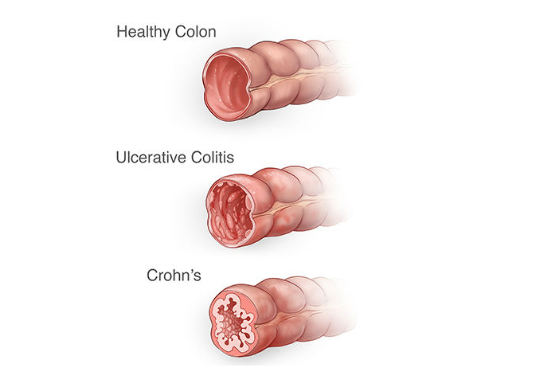
Ulcerative colitis:
- Affects only the colon (large intestine)
- Causes continuous inflammation starting in the rectum
- More commonly causes frequent diarrhea with blood
- May increase urgency to use the bathroom
Learn more about ulcerative colitis in children.
Crohn’s disease:
- Can affect any part of the digestive tract (from mouth to anus)
- Often appears in patchy areas, with healthy tissue between inflamed sections
- May involve deeper layers of the intestinal wall
- More likely to cause abdominal pain and weight loss
- Can sometimes lead to narrowing of the intestine over time
Neither condition is “more serious” than the other. However, where the inflammation occurs and how deeply it affects the intestine can influence treatment decisions and long-term management.
Learn more about Crohn’s disease in children.

IBD vs. IBS: What’s The Difference?
It’s common to wonder whether symptoms are caused by inflammatory bowel disease (IBD) or irritable bowel syndrome (IBS). Although the names sound similar, they are very different conditions.
IBD:
- Causes inflammation inside the digestive tract
- Can lead to bleeding, ulcers and tissue damage
- May affect growth, weight gain and puberty in children
- Diagnosed through blood tests, stool studies and endoscopy
- Requires medical treatment to control inflammation
IBS:
- Affects how the digestive tract functions
- Causes abdominal pain, bloating, and changes in bowel habits
- Does not cause inflammation or bleeding
- Does not cause long-term intestinal damage
- Does not affect growth
- Often managed with diet changes and stress management
The distinction matters because evaluation and treatment are very different. Children with persistent diarrhea, blood in the stool, unexplained weight loss or delayed growth should be evaluated for IBD.
For more details, read: IBD vs. IBS: How to tell the difference.
What are the Early Symptoms of IBD In Children?
IBD symptoms often develop gradually. If your child has been experiencing these symptoms for several weeks, if they are worsening over time, or if they are beginning to interfere with daily life, it may be time to seek professional support.
Common symptoms include:
- Ongoing abdominal (stomach) pain
- Chronic diarrhea
- Blood in the stool
- Unexplained weight loss
- Fatigue or low energy
- Loss of appetite
- Urgency to use the bathroom
- Delayed growth or delayed puberty
Consult a Pediatric Gastroenterology Specialist
Many parents notice that something just doesn’t seem right. If something feels off, trust your instincts. Early evaluation can make a meaningful difference. Our pediatric gastroenterology specialists can provide a comprehensive evaluation plan. Call to schedule an appointment and learn more about the next steps in your child’s care.
Call today to schedule an appointment with one of our pediatric specialists.
What causes IBD in children?
The exact cause of inflammatory bowel disease is still being studied. Current research suggests that IBD develops when the immune system becomes overactive and mistakenly attacks the digestive tract, causing ongoing inflammation.
Several factors may contribute, including:
- Genetics (family history of IBD)
- Immune system changes
- Environmental influences
In most cases, there is no single identifiable trigger. It’s important to know that IBD is not caused by something a parent did or didn’t do. Diet alone does not cause IBD, and stress does not cause IBD, although stress may worsen pre-existing symptoms during a flare.
How is IBD diagnosed in children?
Diagnosis begins with a detailed medical history and physical exam. Doctors look at symptoms, growth patterns and family history. While the idea of testing can feel overwhelming, each step provides clear answers and helps guide the right treatment plan.
Testing may include:
- Blood tests to check for inflammation and anemia
- Stool studies to rule out infection
- Imaging studies to examine the intestines
- Endoscopy and colonoscopy to view the digestive tract and collect small tissue samples
Why Is IBD a Concern in Children?
Childhood and adolescence are critical times for growth and development. When inflammation continues over time, it can interfere with the body’s ability to absorb nutrients from food. Nutrients are essential for healthy weight gain, height growth, bone strength and puberty development.
Ongoing inflammation may also lead to:
- Fatigue or low energy
- Missed school days
- Difficulty concentrating
- Emotional stress
Because pediatric IBD can affect more than just the digestive tract, children benefit from care by specialists who understand how the disease impacts growth and development. Early treatment helps control inflammation, protect growth and reduce the risk of long-term complications.
Learn more about CHOC’s Inflammatory Bowel Disease (IBD) Program.

How Is IBD Treated in Children?
There is currently no cure for IBD, but there are highly effective treatments. Your child’s care team will recommend treatment based on the type of IBD, symptom severity and growth needs. Ongoing monitoring helps ensure inflammation remains under control over time.
The goals of treatment are to:
- Reduce inflammation
- Relieve symptoms
- Support healthy growth and development
- Prevent complications
- Maintain long periods of remission
Treatment plans are highly individualized and may include:
- Anti-inflammatory medications
- Immune-modifying medications
- Biologic therapies
- Nutritional therapy and dietary support
- Surgery (in selected cases)
- Ongoing monitoring and follow-up care
Living With IBD
A diagnosis of IBD can feel overwhelming at first. Many families worry about how it will affect school, sports, friendships and the future. With appropriate treatment and monitoring, many children with IBD lead active, full lives. Flare-ups can often be managed with medication adjustments. Attention to nutrition, mental health and regular follow-up care all play important roles.
IBD management evolves as a child grows. An ongoing partnership with a pediatric GI team ensures that care adapts over time.
A Specialized Pediatric IBD Program
When your child is living with Crohn’s disease or ulcerative colitis, specialized care matters. Our pediatric IBD Program provides comprehensive, evidence-based treatment tailored specifically for children and teens, supported by a dedicated team that includes gastroenterologists, dietitians, psychologists and care coordinators.
As the only Orange County hospital participating in ImproveCareNow, we are advancing IBD care to help children achieve remission and get back to being kids.
IBD Frequently Asked Questions
Is IBD curable?
IBD is a chronic condition and does not currently have a cure. However, many children achieve long periods of remission with modern treatments.
Can children outgrow IBD?
Inflammatory bowel disease is a chronic condition, which means it does not go away permanently. However, many children experience long periods of remission when inflammation is well controlled and symptoms are minimal or absent.
With consistent medical care, careful monitoring and individualized treatment, children with IBD can grow, develop and participate fully in school and activities. Ongoing follow-up helps adjust treatment as a child’s body changes over time.
Will my child need surgery?
Most children are treated successfully with medication. Surgery may be recommended if inflammation is difficult to control or complications develop. Surgical decisions are carefully and individually made. Pediatric gastroenterologists and surgeons work closely with families to determine the safest and most effective approach.
What is a flare-up and what should I do if my child experiences one?
A flare-up is a return or worsening of one or more of the symptoms that originally led your child to be diagnosed with IBD, such as diarrhea, rectal bleeding and cramping. Most people with IBD experience an occasional flare-up. If your child seems to be showing symptoms of a flare-up, it’s a good idea to check in with your child’s primary care doctor or gastroenterologist.
Does my child need to follow a special diet?
There is no one single diet or eating plan that will do the trick for everyone with IBD. Dietary recommendations must be individualized based on the disease you have, and the part of your intestine affected. Furthermore, these diseases are not static; they change over time and eating patterns should reflect those changes. The key point is to work with your medical provider to develop a plan for a well-balanced, healthy diet. At Rady Children’s Health in Orange County, we are one of the only pediatric health systems to offer a Culinary Medicine Program to help patients with IBD, and other gastrointestinal conditions, learn how to manage and treat their symptoms with food.
How common is IBD?
Approximately 1.6 million Americans currently have IBD, and approximately 80,000 are children. The Crohn’s and Colitis Foundation reports that as many as 70,000 new cases of IBD are diagnosed in the United States each year.
Is IBD caused by stress?
No, there is no evidence that IBD is caused by stress. However, living with a chronic illness can be stressful, and stress can contribute to a flare-up. At Rady Children’s Health in Orange County, psychologists are available to provide specialized care for children and teens with IBD.
Will my child need to be hospitalized?
Typically, children can manage their IBD at home and do not require hospitalization. If symptoms become severe, a brief hospital stay may be needed to correct malnutrition and stop diarrhea and the loss of blood, fluids and mineral salts. Your child will be treated with a special diet, feeding through a vein, medications or, in some cases, surgery.
Should my child restrict physical activities?
If your child is feeling well enough to participate, physical activity is encouraged. In addition to the many other benefits of exercise, it can also help maintain bone density, which can be very helpful for children with IBD. Your child’s doctor will give you more specific advice about good activities for your child.
Call today to schedule an appointment with one of our pediatric specialists.
More About IBD

Gastroenterology
Your child’s poop: An ultimate guide
A CHOC pediatric expert offers advice for parents on the full spectrum of poop, including color, frequency, diarrhea and constipation.
 CHOC Health
Gastroenterology
Navigating summertime while living with IBD
People with IBD know environmental factors can influence their disease, including summer. Here’s some tips from CHOC’s gastroenterology team.
Gastroenterology
Difference Between IBD and IBS
It’s normal for kids to get stomach aches, but some kids have bad stomach pain all the time. A CHOC gastroenterologist explains IBD vs. IBS.